Algo Time-Line Forecast
Overview
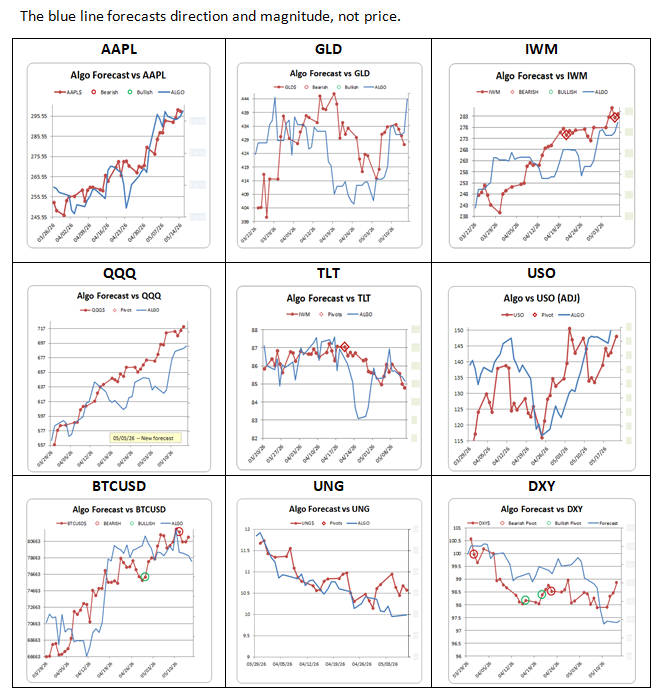
Algo Time-Line forecasts are derived from historical price action, using past time-lines as the foundation for projecting future asset behavior. To identify a time-line with an above-average probability of accurately forecasting an asset's movement over the next two months, it must first demonstrate a high correlation with the asset's price action over the preceding two months.
Shared Characteristics with Cycle Analysis
These forecasts share key characteristics with traditional cycle analysis, including two well-known phenomena:
- Inversions The asset begins moving in the opposite direction of the projected time-line.
- Migrations The asset decouples from its current time-line and begins conforming to an entirely new one.
Key Advantage
While Algo Time-Line forecasts and traditional cycles share these characteristics, a key distinction is the time-line's ability to generate short-term, near-daily directional forecasts.
The most significant advantage this methodology offers traders is when a 5-to-10-day forecast projects a clear and substantial move — either up or down — the probability of the asset following that direction is high, though the move may begin a few days earlier or later than projected.
Adjustments
Algo Time-Lines are periodically adjusted — shifted a few days forward or backward — to achieve the best possible alignment with current price action.
To account for what traditional cycle analysis refers to as an inversion, the time-line is simply flipped, inverting the projection to reflect the asset's opposing behavior.
Samples